Aworth News
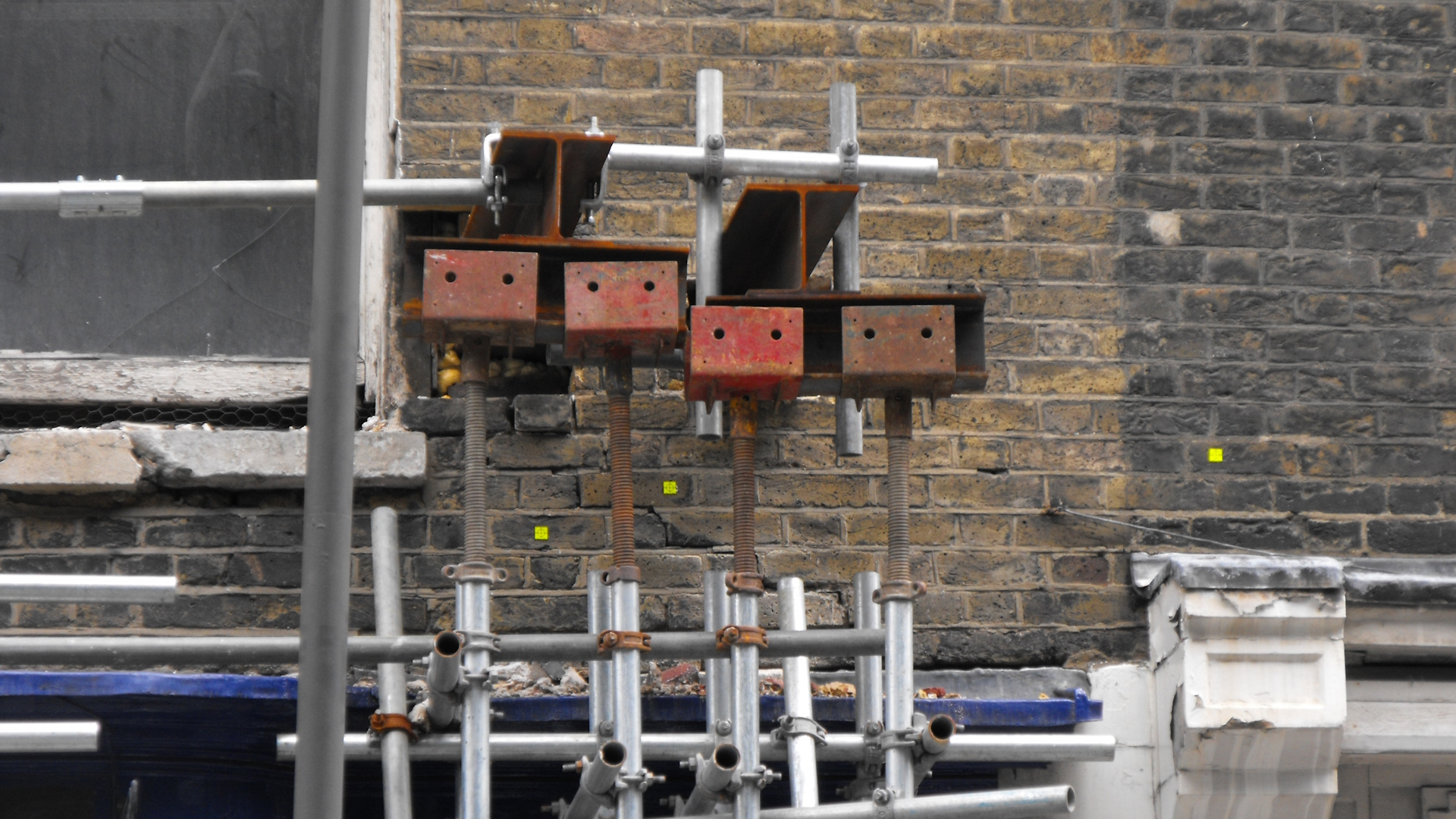
Movement Monitoring and Deformation Surveys
February 23, 2026
Aworth has been providing engineers, consultants, and construction companies with precise movement monitoring and deformation site data for modelling and analysis for over sixty years. Movement monitoring and deformation measurement surveys are systematic processes used to track alterations in the shape, dimension, and spatial position of structures and land over time.
These services act as an early warning system to detect structural distress, validate engineering design assumptions, and ensure the safety of critical assets—such as deep excavations, basement construction, retained façades, and heritage buildings.
When Are Movement Monitoring and Deformation Surveys Required?
Surveys are required across several specific scenarios driven by construction risks, statutory legal obligations, and long-term asset management.
Construction and Engineering Risks
Monitoring is primarily mandated when construction activities have the potential to affect the stability of the site or surrounding assets. This includes:
- Excavations and Tunnelling: Required for deep excavations and basement construction to detect "settlement troughs" and ground relaxation that could compromise nearby foundations.
- Vibration-Inducing Works: Activities such as piling or demolition necessitate monitoring to ensure ground-borne vibrations remain within safe parameters for adjacent structures.
Statutory and Regulatory Requirements
Specific legislation and planning policies often trigger the need for professional monitoring:
- Party Wall etc. Act 1996: Typically required when building owners carry out complex works—such as basement excavations—to provide objective evidence of structural stability to adjoining owners.
- London Planning Conditions: Boroughs like Westminster, Camden, and Kensington & Chelsea often require a Basement Impact Assessment (BIA) and a subsequent monitoring regime as a condition for planning approval.
- Network Rail Standards: Any works adjacent to rail infrastructure must comply with Standard NR/L2/CIV/177, stipulating minimum requirements to maintain safe train operations.
- Building Safety Act 2022: For "higher-risk buildings," real-time monitoring supports compliance by contributing to the "Golden Thread" of safety information required across the asset's lifecycle.
Structural Health and Asset Management
Ongoing surveys are essential for critical infrastructure and buildings showing signs of distress:
- Critical Infrastructure: Dams, bridges, and nuclear facilities require periodic or continuous surveys to monitor for crest displacement, pier settlement, and seepage-induced movement.
- Visible Defects: The emergence of widening cracks, leaning walls, or uneven floors acts as a trigger for independent engineering surveys to assess the severity of movement.
- Heritage Preservation: Sensitive historic buildings often require tighter monitoring trigger levels to prevent irreversible damage to brittle finishes or delicate masonry.
Insurance and Financial Triggers
- Insurance Renewals and Claims: Insurers may require baseline structural surveys for high-value properties prone to subsidence before underwriting cover. They also use monitoring to validate claims for structural damage.
- Mortgage and Lending: Lenders may request a structural report if a valuation survey identifies signs of historical or active movement before approving funds.
Methodology and Process
The process involves a structured transition from establishing a fixed reference frame to the real-time analysis of structural changes. Our services follow a lifecycle governed by international standards (BS EN ISO 18674) and professional guidelines (RICS Measured Surveys 3rd Edition).
- Design Phase: Engineering consultants determine the "zone of influence" and establish a risk-based design, upon which we can establish a viable plan of monitoring.
- Target Placement: Object points (monitored targets) are installed at critical stress locations, such as foundation levels, floor slabs, and masonry arches.
- Baseline & Periodic Measurement: Initial measurements establish the baseline immediately after installation. Agreed periodic measurements are then undertaken based on the nature of the proposed works.
We utilise ultra-precise measurement instruments including:
- Automated Motorised Total Stations (AMTS): Robotic instruments that repeatedly measure 3D prisms or reflective targets.
- Digital Levels: The most precise tool for detecting vertical displacement (settlement or heave), achieving sub-millimetre accuracy using bar-coded invar staffs.
- Terrestrial Laser Scanning (TLS): Captures millions of points to create a "point cloud," allowing for surface-wide deformation analysis, ideally suited for monitoring cliff erosion or complex façades.
Analysis and Reporting
Monitoring schemes operate on a pre-defined set of "trigger levels" that dictate emergency actions based on the "Traffic Light" Protocol:
- Green Trigger (Normal): Movement is within calculated design expectations (e.g., 0–7 mm). Construction continues with routine reporting.
- Amber Trigger (Warning): Movement reaches a threshold (e.g., 7–12 mm) requiring a design review, increased monitoring frequency, and contingency implementation.
- Red Trigger (Limit): Movement reaches a tolerable limit (e.g., >12 mm). All works must stop immediately for remedial action and emergency stabilisation.
Reporting: Factual reports are issued weekly or monthly, featuring data visualisation graphs, trend charts, and a RAG (Red/Amber/Green) status indicator which demonstrates movement relative to the base readings.
Once construction is complete and movement has stabilised, a final close-out report provides a permanent record of structural performance for long-term asset management.
Please do not hesitate to contact us on 01825 768319 or als@aworth.co.uk to discuss your monitoring survey requirements.
Head Office
Norfolk House, Norfolk Way,
Uckfield, East Sussex TN22 1EP
T: 01825 768 319
London Office
The Lansdowne Building,
2 Landsdowne Road, Croydon CR9 2ER
Newsletter
Subscribe to our mailing list to keep in touch with all the latest news or follow us on:








© 2026 Aworth Survey Consultants. All rights reserved.
Site by: Networld Design